
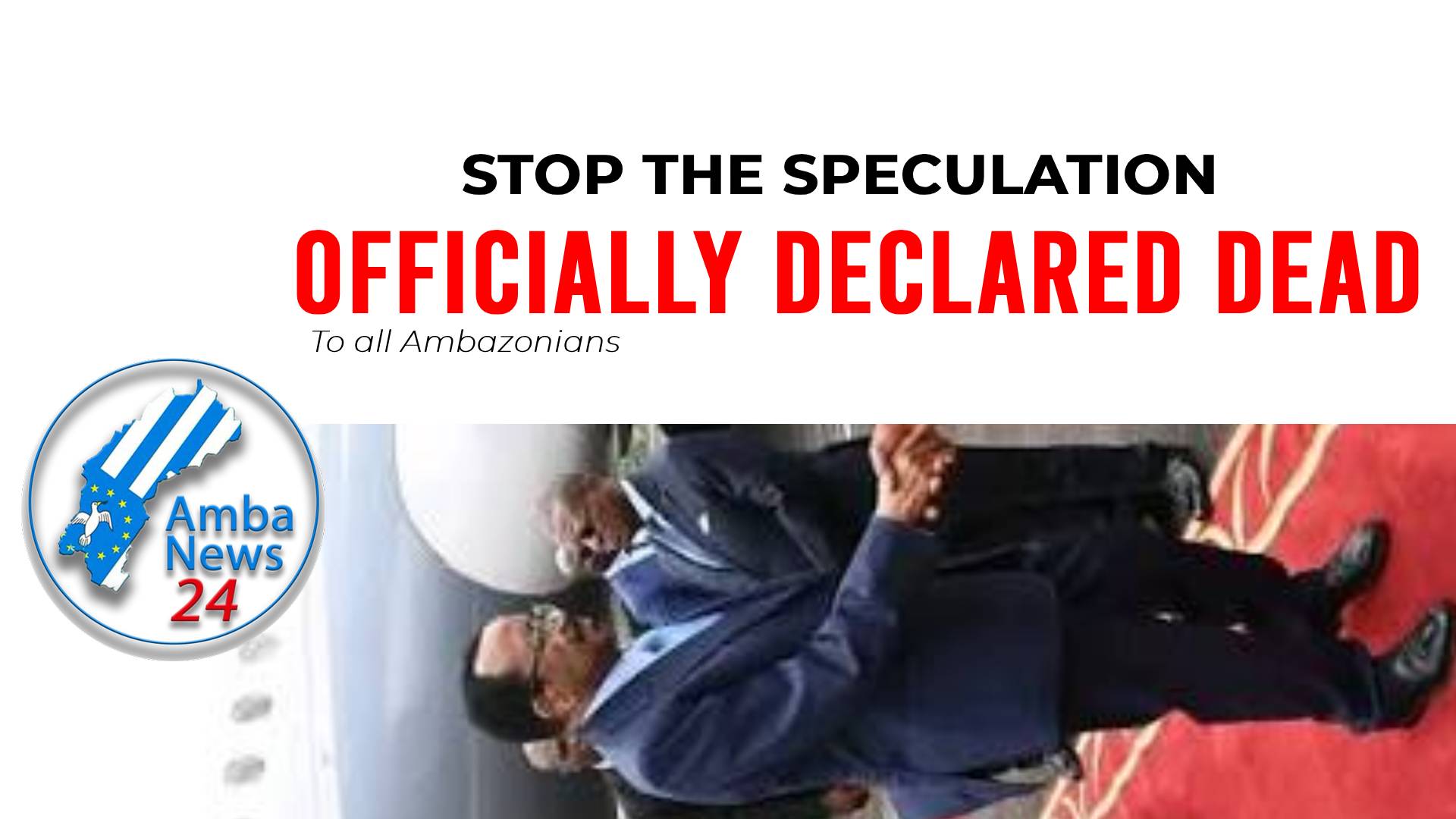

The presidential motorcade that sped toward the airfield on the rainy evening of June 7, 2026, carried no foreign dignitaries, trade envoys, or press corps.
Inside the darkened state limousine sat President Paul Biya—ninety-three years old, increasingly frail, and clinging to the presidency he had occupied for nearly four decades.
When the presidential aircraft touched down outside Zurich, Paul disappeared into a network of private medical compounds along Lake Geneva.
State media offered only a brief, familiar explanation:
The President is undergoing routine physical evaluation.
He was never seen again.
For weeks, then months, the nation was effectively governed by a ghost. State broadcasters replayed archival footage of Paul from the late 1990s. Presidential decrees appeared with an automated digital signature. Foreign ambassadors seeking access to the presidential palace were met by an increasingly narrow circle of loyalists who offered little more than assurances that the President remained in command.
But no one could produce him.
The Myth of the 150-Year President
As the political vacuum deepened, rumor rushed in to fill it.
Camerounn society became consumed by speculation about the dictator’s health—and his extraordinary obsession with defeating death.
During his final decade in power, Paul had reportedly directed tens of millions of dollars from the national treasury toward longevity research, specialized stem-cell clinics, and international bio-gerontology conferences.
As his physical condition deteriorated, state-controlled tabloids began publishing increasingly fantastical claims.
According to the propaganda machine, breakthroughs in cellular reprogramming and gene therapy could allow the President to reach his 150th birthday—and remain in office to celebrate it.
For a population that had already watched one man dominate the country for nearly forty years, the prospect was less inspiring than terrifying.
THE ANATOMY OF A DESPERATE MYTH
- June 2026: Paul departs for a private Swiss medical facility.
- July 2026: Rumors emerge of experimental organ replacement and cellular repair.
- August 2026: The information blackout becomes nearly total.
- Present: The public refuses to accept an absent ruler as an eternal head of state.
People familiar with the President’s medical entourage claimed that Paul had traveled to Switzerland seeking what insiders called the ultimate medical gambit: experimental gene editing, multi-organ transplantation, and even bio-synthetic neural preservation.
The rumors grew more elaborate by the day.
Some imagined a ruler determined to conquer mortality itself—a president who would emerge from a Swiss clinic rejuvenated and ready to govern for another half-century.
Others simply wanted proof that he was alive.
They received neither.
The Breaking Point: Denying the Phantom
By late summer, public patience had reached its limit.
State institutions were increasingly paralyzed. International dealings stalled. Government decisions became harder to attribute to any living authority. And across the country, a simple question began to dominate political conversations:
Who is actually governing Cameroun?
The answer, increasingly, appeared to be nobody.
A coalition of parliamentarians, civic leaders, and judicial figures eventually gathered at the National Assembly in the capital. The regime’s remaining inner circle attempted to delay the proceedings, insisting that Paul was undergoing a “rejuvenation” treatment and would soon return.
The Assembly was unconvinced.
Speaker delivered the message that would define the crisis:
“We are not subjects of a biological experiment, nor are we the kingdom of an immortal phantom. No gene therapy, organ transplant, synthetic heart, or artificial brain can suspend ninety-three years of nature—or keep a ghost on our nation’s throne.”
The chamber erupted in applause.
Outside, thousands gathered as lawmakers invoked constitutional provisions governing presidential incapacity and vacancy.
Then came the vote.
The Assembly formally declared the presidency vacant and recognized Paul Biya as legally and politically dead.
THE PARLIAMENTARY RESOLUTION
“Whether his physical heart beats in a Zurich clinic or has long since stopped, the presidency is VACANT. The nation moves forward.”
For the first time in nearly four decades, Cameroun had a political future that did not depend on the whereabouts of one man.
Victory for the Subjects
Whether Paul Biya lies in an unmarked grave, remains inside a Swiss medical facility, or is connected to machines somewhere in the Alps no longer matters to the people he left behind.
What mattered was the authority he had exercised—and the country’s decision to withdraw it.
The declaration was not an act of mourning. It was an act of political emancipation: a rejection of autocracy, vanity, and the idea that an entire nation could remain frozen in time while one aging ruler pursued immortality.
Paul had spent decades building a political system designed to make himself indispensable.
In the end, his disappearance accomplished what his opponents had failed to do.
It made him irrelevant.
His final quest for immortality produced the ultimate irony: in trying to live forever, he lost the presidency without anyone having to remove him.
The man who once insisted that Cameroun could not function without him was eventually defeated by his own absence.
And so, while the world continues to wonder whether Paul Biya is alive somewhere near Lake Geneva, Cameroun has already answered the question that matters most:
The country is alive.
And it has moved on.
Disclaimer: Part of this article is fictional for now, but may become a true story.
Leave a Reply